
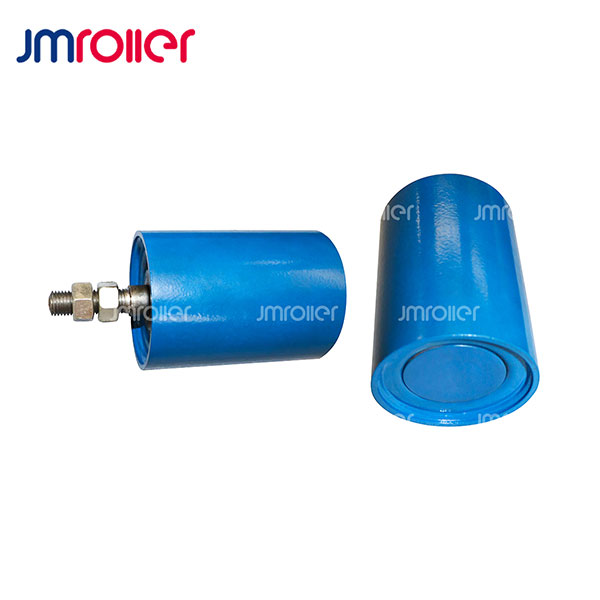
Product details
Guide rollers can be used to guide or point an object in a particular
direction. As far as a boat trailer is concerned, the guide roller is what the
boat comes in contact with first when loading. When applied in the context of a
rolling conveyor application, the guide roller helps maintain a belt conveyor’s
alignment and integrity while it is in motion.
Conveyor Guide rollers Features:
mounted on two sealed ball bearings and steel shaft. Optional threaded or
stainless steel shafts are available.
Available in wide variety of models and dimensions to fit all your needs.
We understand that different customers may have different requirements. And
that is why we also provide customized conveyor guide rollers based on your
specific needs as per your request or cover existing rolls.
The advantages of Conveyor guide rollers:
Our conveyor guide rollers keep the conveyor belt aligned ensuring smooth
hassle free operations and movement.
They also secure the belt edge adding to the age of conveyor belts by
avoiding wearing and tearing.
Application:
Mining
Steel mill
Cement plant
Power plant
Chemical Plant
Sea Port
Storage
etc.
Application and selection guide
Guide rollers provide a guiding contact at a defined location in a conveyor arrangement. Their position, mounting direction and contact surface should be reviewed against the belt or material handling design, especially when an existing installation shows persistent misalignment.
Where this product fits
Clarify whether the roller acts at the belt edge or within another guiding mechanism. A photograph of the complete assembly is more informative than a close-up of the roller alone.
Information for a suitable proposal
Specify the contact diameter, face length, shaft mounting and available adjustment. Describe the reason for replacement so that rubbing caused by another alignment issue is not mistaken for normal guiding duty.
The roller, its mounting frame and the belt form one working assembly. Confirm the shell length, shaft end form and installed clearances against the existing structure. Photographs help identify the arrangement, while an approved drawing is preferable when the replacement must fit an established conveyor.
Installation and maintenance considerations
Inspect the contact surface for local wear and verify that the mounting has not shifted. Investigate repeated edge contact with the responsible conveyor maintenance team.
Include belt speed, conveyed material, expected contamination and the position on the conveyor in the inquiry. A carrying position, a loading point and a return strand expose a roller to different duties. Ask for the proposed bearing and sealing arrangement to be checked against those conditions rather than choosing by outside appearance alone.
For related options, explore roller sets and supporting arrangements or discuss the application with JuMing.