
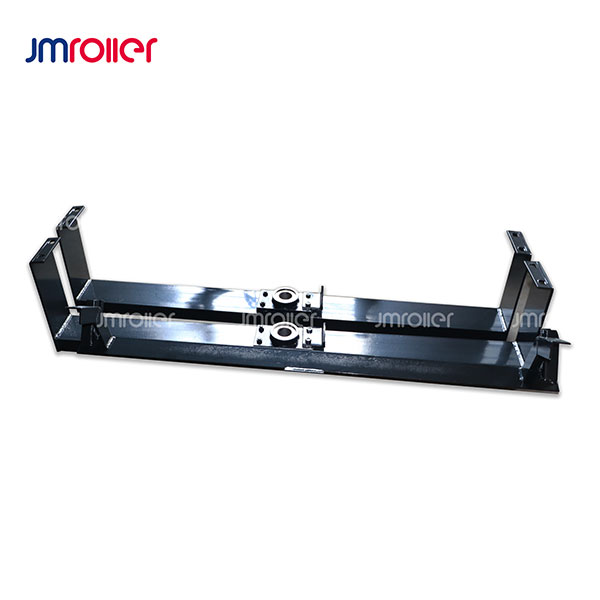
Product details
Self-aligning return frame is an important part of the belt conveyor and is used to support return roller.
The whole roller sets of self-aligning return roller automatically trains belt and protects edges from damage cause misalignment.
The material is angle steel/channel steel/steel tube, and it is widely used in mining, metallurgical and coal industry. It can be produced by different sizes based on belt width, frame angle and conveyor types. It is a very important component of nonstandard machinery.
Application and selection guide
A self aligning return frame provides the mounting structure for a return-side aligning roller assembly. Its geometry must fit the return belt arrangement and leave sufficient room for the intended movement beneath the main conveyor steelwork.
Where this product fits
Identify the return profile and the position of the frame along the conveyor. Photographs should show nearby structures, carryback deposits and the belt path through the existing assembly.
Information for a suitable proposal
Provide mounting centres, pivot detail, roller fixing positions and movement clearances. Clarify which parts are required when the replacement covers only the frame rather than a complete aligning set.
A conveyor frame is a structural and dimensional interface between rollers and the main conveyor steelwork. Confirm the installation envelope, bolt positions, roller fixing details and required belt profile. Drawings are especially useful where the existing conveyor uses a site-specific bracket or an unusual mounting arrangement.
Installation and maintenance considerations
Check pivots, contact areas and fixings during shutdown. Remove obstructions using the approved maintenance procedure and verify that the structure is not bent or misaligned.
State whether the frame will be supplied alone or together with rollers. Include the conveyed material and the intended location so that loading, access and contamination can be discussed. Before fitting, check the supporting steelwork for distortion and establish alignment with neighbouring stations; the replacement should sit squarely without forcing the mountings.
For related options, explore compatible roller set arrangements or discuss the application with JuMing.