
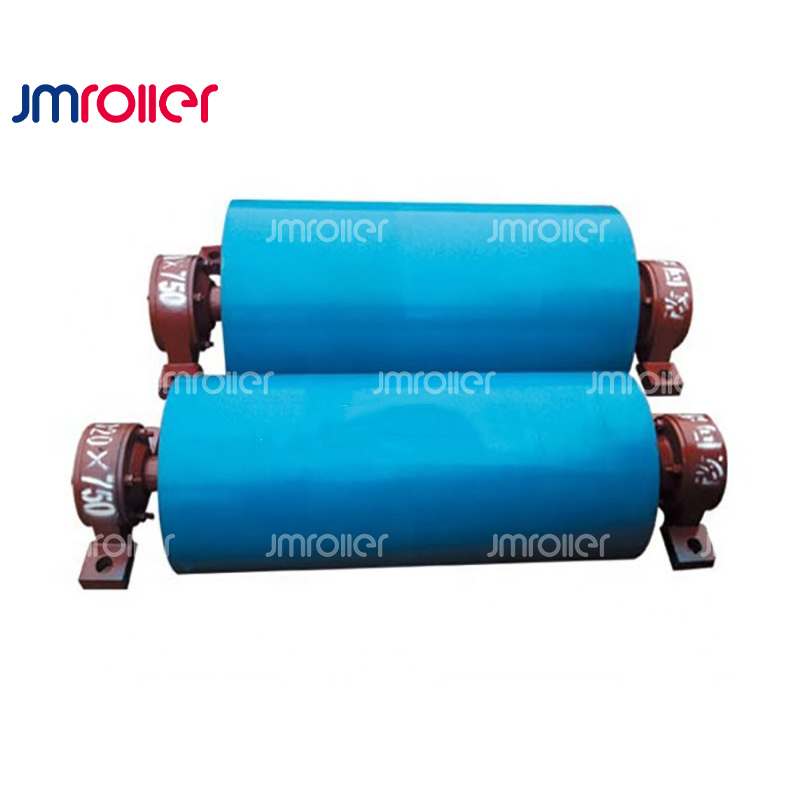
Product details
A bend pulley is used for changing the direction of the belt. pulley has the features of compact structure, light weight, low occupancy, reliable performance, beautiful appearance, safe and convenient to use, and can work normally under harsh conditions such as dusty, wet and muddy. They are suitable for use in machinery, metallurgy, mining, ports and terminals, chemical and pharmaceutical, cement and building materials, steel and coal mines; they are the driving devices of various mobile belt conveyors and can also be used for some fixed belt conveyors. The redirecting pulley is used to change the running direction of the conveyor belt or to compress the belt to increase the angle of the belt with the drive pulley.
Application and selection guide
A bend pulley changes the direction of the belt within a conveyor’s pulley arrangement. Its position, belt contact and supporting bearings should be specified within the complete belt path, especially when replacing an existing pulley assembly.
Where this product fits
Mark the bend pulley on a conveyor layout to distinguish it from the head, tail or take-up positions. Explain the existing surface condition and whether material build-up is present.
Information for a suitable proposal
Provide the pulley assembly drawing and show the belt’s approach and departure. Confirm shaft interfaces, bearing positions and available clearance to the surrounding conveyor structure.
Pulley selection involves the belt, shaft, bearings, mounting arrangement and operating duty together. Provide an assembly drawing showing the face width, shaft geometry, bearing positions and any coupling or locking interface. Describe the belt construction and conveyor position so that the proposed arrangement can be reviewed in context.
Installation and maintenance considerations
Inspect the shell or covering for uneven wear. Check alignment and bearing support during replacement so that the new pulley maintains the intended belt path.
Include information about the existing surface covering, contamination, access and the reason for replacement. The suitability of a pulley is not established by diameter alone. During installation, alignment, bearing support and belt condition should be checked as a system; inspection and adjustment should follow the equipment supplier’s instructions and the site’s isolation procedure.
For related options, explore pulley lagging and surface options or discuss the application with JuMing.