
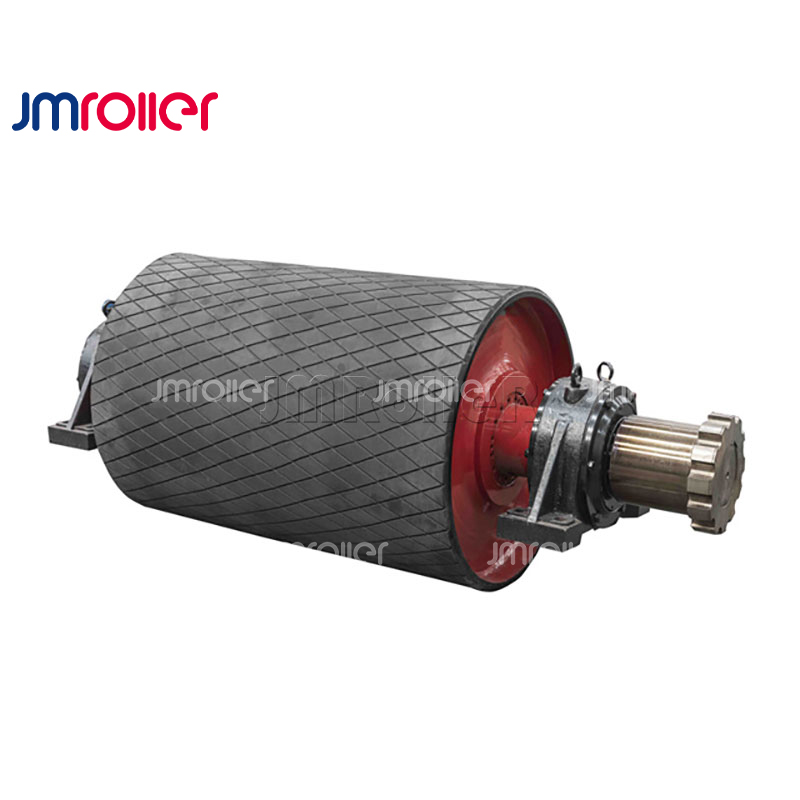
Product details
A snub pulley improves the traction of the drive pulley, by increasing its belt wrap angle. The snub pulley serves to increase the length of the tensioned conveyor belt in order to increase the contact and friction surface between drive pulley and belt. If necessary, this pulley is placed directly behind the drive pulley, in the lower part of the system.
The friction surface has a large effect on the performance of the system because the drive depends on the friction between pulley and belt. In addition, the greater the friction surface between drive pulley and belt, the more grip the pulley has on the belt which will stop the belt from slipping. The snub pulley is therefore particularly suitable for conveyor systems that require very high drive power or systems in highly contaminated environments.
Application and selection guide
A snub pulley modifies the belt path close to another pulley in the conveyor arrangement. Its placement and contact geometry should be reviewed with the surrounding drive or turning system rather than treated as an independent general-purpose roller.
Where this product fits
Provide a layout showing the snub pulley and neighbouring pulleys. Explain the existing belt path and identify any access limits created by guards, chutes or supporting steelwork.
Information for a suitable proposal
Specify the assembly drawing, bearing positions, shaft interfaces and surface covering. Include the current belt details so the proposed arrangement can be assessed within the intended pulley system.
Pulley selection involves the belt, shaft, bearings, mounting arrangement and operating duty together. Provide an assembly drawing showing the face width, shaft geometry, bearing positions and any coupling or locking interface. Describe the belt construction and conveyor position so that the proposed arrangement can be reviewed in context.
Installation and maintenance considerations
Check surface wear and the condition of nearby pulleys. Alignment should be verified across the arrangement because a local change can affect the belt’s approach elsewhere.
Include information about the existing surface covering, contamination, access and the reason for replacement. The suitability of a pulley is not established by diameter alone. During installation, alignment, bearing support and belt condition should be checked as a system; inspection and adjustment should follow the equipment supplier’s instructions and the site’s isolation procedure.
For related options, explore pulley lagging and surface options or discuss the application with JuMing.