
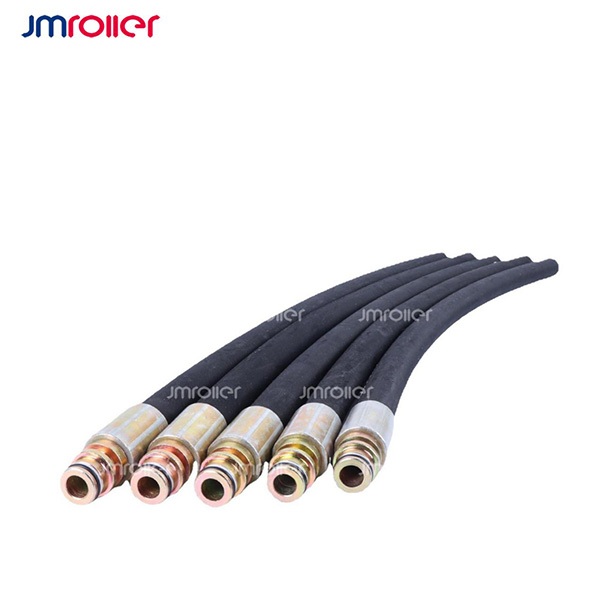
Product details
High pressure Hose Assembly is a type of high-pressure hose assembly,
typically consisting of high-pressure rubber hoses, metal fittings, and other
connectors. Its main purpose is to transfer fluids or gases in hydraulic systems
and withstand high pressure.
Main components:
1. High-pressure rubber hose: usually made of synthetic rubber materials, it
has good pressure resistance and abrasion resistance.
2. Metal fittings: used to connect hoses to other components in hydraulic
systems, ensuring fluid transmission and sealing.
3. Other connectors: such as sleeves, threaded connectors, etc., used to fix
and connect high-pressure rubber hoses and metal fittings.
Main applications:
1. Engineering machinery: used in hydraulic systems of excavators, loaders,
and other engineering machinery to transfer hydraulic oil.
2. Automotive industry: used in hydraulic brake systems, power steering
systems, etc., in automobiles.
3. Industrial equipment: used in hydraulic transmission systems of various
industrial equipment.
High pressure Hose Assembly plays a vital role in hydraulic systems due to
its reliability and pressure resistance. It is widely used in various industrial
fields.
Application and selection guide
A high pressure hose assembly combines flexible hose and end connections into a specified unit. Correct identification depends on the complete assembly, including fitting type, orientation and finished length, as well as the hose’s intended pressure and fluid duty.
Where this product fits
Use an assembly drawing to show both ends and how the hose is routed. Identify moving joints or locations where the hose could twist, rub or be pulled during operation.
Information for a suitable proposal
Specify the medium, temperature, operating pressure, finished length and connection standards. Mark the relative orientation of angled fittings and identify any required protective covering.
A hose inquiry must identify the conveyed medium, operating pressure, pressure peaks, temperature and installation movement. Supply the current hose marking, connection information and a layout of the route. The hose, end fittings and any protective measures should be assessed as one compatible assembly by a qualified supplier.
Installation and maintenance considerations
Inspect connections and cover condition as part of the equipment’s maintenance plan. Avoid forcing a replacement assembly into a route that introduces twist or strain.
Never choose a hydraulic replacement solely by outside diameter or by copying the appearance of a fitting. Length, routing, bend behaviour and connection compatibility matter. Inspection or replacement requires proper isolation and pressure release under the site’s procedure. A visibly damaged hose should be assessed before use rather than repaired with an improvised external patch.
For related options, explore related hose and pipeline products or discuss the application with JuMing.