
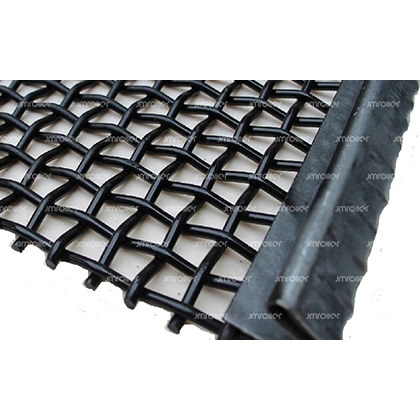
Product details
Heavy Duty Crimped Wire Mesh is a mesh structure formed by metal wires that
are pre-bent and woven. This type of woven mesh uses heavy-duty wires and
undergoes a special weaving process to create stable mesh openings and a robust
structure. It typically has larger mesh sizes and higher open area ratio.
Material: blcak steel wire,whiy, steel wire,lead wire,stainless steel
wire,brass wire,copper wireand flat wire etc
Application: Heavy Duty Crimped wire mesh is also named Quarry Mesh,it is
mostly used asscreen in mining,coal factory,construction and other
industries.
Type of weaving: crimped before weave, double- direction separate, ripples
flections, tight lockflections, flattop flections, double- direction
flections, list- direction separate ripples flections.
Characteristics: The
structure is hard, enduring, graceful, the mesh of mesn is even, with
its characteristics of corrosion-resisting
The Heavy Duty Crimped Wire Mesh finds extensive applications in the
industrial field, including but not limited to the following areas:
1. Mining Screening: Used in mining, quarrying, and other fields to screen
and classify various ores and mineral materials.
2. Construction Engineering: Utilized in construction projects for screening,
filtering, and reinforcement.
3. Stone Processing: Employed in stone cutting, processing, and other related
processes for screening and filtering.
4. Raw Material Handling: Applied in the processing and handling of raw
materials, granular materials, etc., for screening and filtering.
5. Coal Industry: Utilized in coal screening, slag removal, and other
processes in the coal industry.
Due to its sturdy and durable characteristics, the Heavy Duty Crimped Wire
Mesh is suitable for handling heavy loads, high strength, and high abrasion
conditions, contributing to improved production efficiency and extended service
life. It plays a significant role in various industrial fields.
Application and selection guide
Heavy duty crimped wire mesh uses an interwoven wire arrangement for suitable screening or separation duties. Its aperture, wire construction, panel dimensions and attachment details should be matched to the feed material and the supporting screening equipment.
Where this product fits
Describe whether the main difficulty is wear, blockage or damaged panels. The relationship between aperture and wire arrangement affects the screening task and should be considered with the required material separation.
Information for a suitable proposal
Provide the existing panel drawing, wire and aperture specification, feed characteristics and mounting arrangement. Include the worn panel’s condition so the supplier can review the proposed replacement in context.
Screen selection depends on the feed and the screening machine together. Record the material, particle distribution, moisture, throughput objective and desired separation. A panel drawing should show the aperture, wire or element arrangement, overall dimensions, edge treatment and how tension or support is applied.
Installation and maintenance considerations
Inspect tensioning and support surfaces during replacement. Check damaged edges or fixings before fitting a new panel so that it sits correctly within the screen deck.
When replacing a screen, include photographs of the worn panel and its mounting area. Uneven wear, blocked apertures and damaged support bars offer useful clues about the operating problem. Inspect fixings and supporting surfaces during planned maintenance, because a correctly specified new screen can still wear unevenly if it is fitted onto a damaged or unsuitable support.
For related options, explore other screening media or discuss the application with JuMing.