
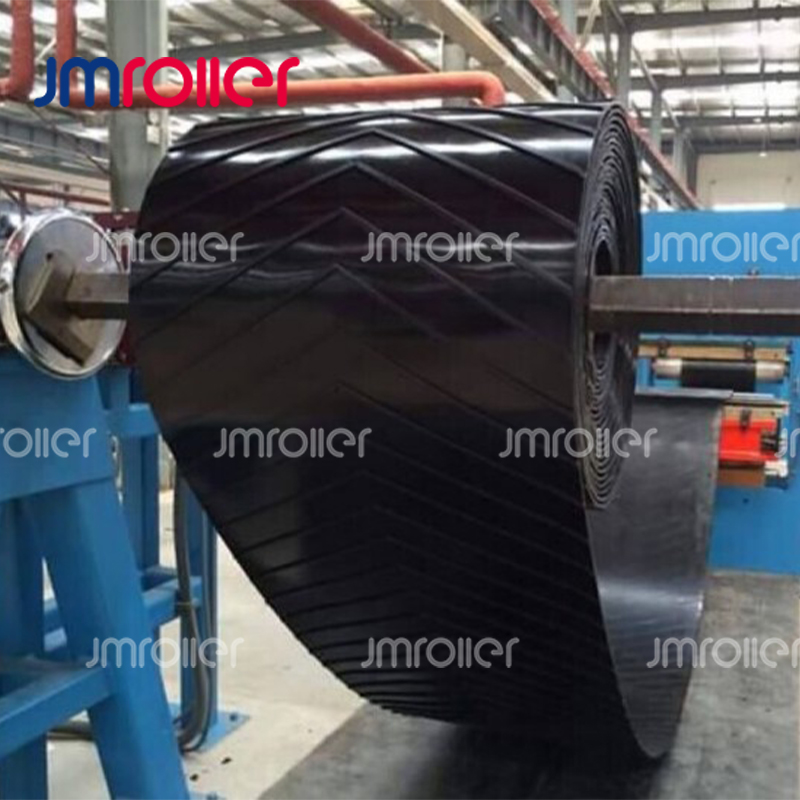
Product details
Definition:
Chevrons belt with chevrons moulded and directly integrated in the cover of the conveyor belt, in order to increase the friction between the belt and material conveyed.
Character:
Suitable for handling bulk materials or bags up to 40゜,slip resistant and big conveying capacity;
Pattern: Open V,Close V, L type, H type, Multi-V type, etc;
Width of Belt(BW): 450mm-1600mm;
Height of Pattern(CH): 5、10、15、25(mm);
Pattern Pitch(CW): 100、200(mm).
Application and selection guide
Chevron belts use a patterned carrying surface to help retain material on suitable inclined conveying duties. Pattern form and height should be considered with the material, incline and loading method rather than selected only from the appearance of the belt.
Where this product fits
Describe how the material behaves on the existing incline, including any sliding, rolling or carryback. Indicate whether the pattern must pass through a particular cleaning or return support arrangement.
Information for a suitable proposal
Provide the belt dimensions, required pattern layout, conveyor incline and material characteristics. Show pulley and cleaner details where the raised pattern creates a specific interface to review.
A conveyor belt should be specified around the complete conveying duty. Describe the material, loading method, incline, belt speed and environmental exposure, then provide the existing belt designation or conveyor drawing. The carcass, covers, pulley arrangement and proposed splice need to be considered together.
Installation and maintenance considerations
Inspect the pattern for uneven wear and damage. Check transitions, scrapers and return supports for clearance so that the raised carrying surface is not unnecessarily damaged.
For a replacement, note the current wear pattern and whether the difficulty is abrasion, impact, carryback or tracking. These observations are useful when reviewing options. Storage, handling and installation should protect the belt from deformation and contamination, and the splice and commissioning procedure should be agreed with the responsible installation team before the belt is put into service.
For related options, explore other conveyor belt constructions or discuss the application with JuMing.