
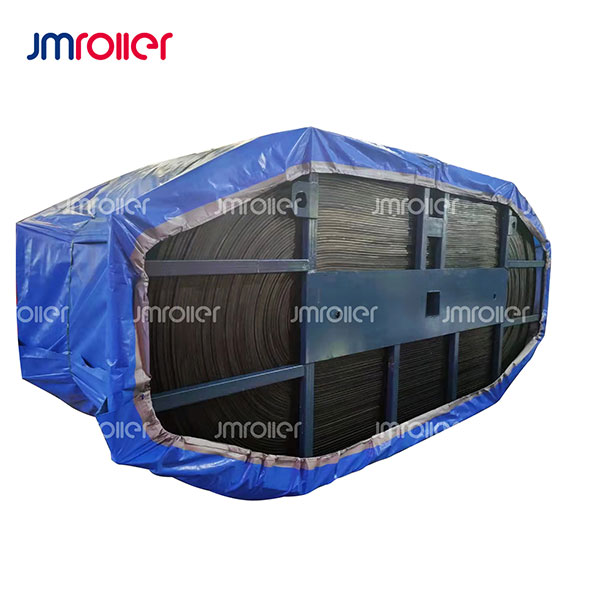
Product details
Usage:
Fabric conveyor belts are suitable for medium and long distance, heavy load and high speed transportation of materials, which is widely used in mines, metallurgy, architecture, ports, electricity, chemical industries, etc.
Fabric Conveyor Belts are named according to different carcass: Nylon Conveyor belt, EP Conveyor belt and Cotton Conveyor belt.
1. Nylon Conveyor belt:Flexible, high tension, impact resistant, low elongation, available for the materials handling of heavy duty, high speed and medium distance.
2. EP Conveyor belt:High modulus, low elongation, impact resistant, excellent heat resistant, available for the materials handling of heavy duty, high speed and medium distance.
3. Cotton Conveyor belt:available for the materials handling of medium distance. Fabric Conveyor Belts are named according to different cover grade.
Fabric Conveyor Belts are named according to different cover grade:
1. Conventional Belt: Generally used for small powder, grain and block materials.
2. Oil Resistant Belt: Generally used for wood, grain transportation.
3. Acid/Alkali Resistant Belt: Always used in Chemical materials transportation.
4. Cold Resistant Belt: The belt can work in some cold environment, like Northeast of China, Russia and North European countries.
5. Abrasion Resistant Belt: Generally used for transport the hard or shaped materials, like iron ore, diamond, copper and other minerals.
6. Fire Resistant Belt: Always used in underground coal mining, steel works and so on.
7. Heat Resistant Belt: According to the temperature of working environment, We can manufacture 3 different grades heating resistant belt, include up to 120℃ grade(HR120), up to 150℃ grade(HR150),up to 180℃ grade(HR180) and up to 200℃ grade(HR200) .Generally used by cements and steel works.
Application and selection guide
Fabric conveyor belts use a textile carcass within a covered belt construction for bulk material handling. Choosing a replacement requires the existing belt designation and operating duty, including loading conditions and the way the belt is supported and spliced.
Where this product fits
Explain the handled material and the main reason for replacement. Cover wear, local impact damage and an unsuitable loading arrangement call for different questions during belt selection.
Information for a suitable proposal
Provide the carcass designation, belt dimensions, cover requirements and splice information from the current installation. Include the operating environment and pulley arrangement when requesting an alternative construction.
A conveyor belt should be specified around the complete conveying duty. Describe the material, loading method, incline, belt speed and environmental exposure, then provide the existing belt designation or conveyor drawing. The carcass, covers, pulley arrangement and proposed splice need to be considered together.
Installation and maintenance considerations
Inspect covers, edges and the splice during planned maintenance. Review damaged loading points or worn support rollers so that a new belt does not encounter the same avoidable problem.
For a replacement, note the current wear pattern and whether the difficulty is abrasion, impact, carryback or tracking. These observations are useful when reviewing options. Storage, handling and installation should protect the belt from deformation and contamination, and the splice and commissioning procedure should be agreed with the responsible installation team before the belt is put into service.
For related options, explore other conveyor belt constructions or discuss the application with JuMing.