
Product details
JM Roller is a manufacturers of standard gravity conveyors and bespoke
gravity roller conveyors, offering a short lead time on many standard products
with fast delivery by our trusted carriers.
We manufacture a wide range of gravity conveyors to suit a range of
industrial applications, each manufactured to suit our customers’ demanded. All
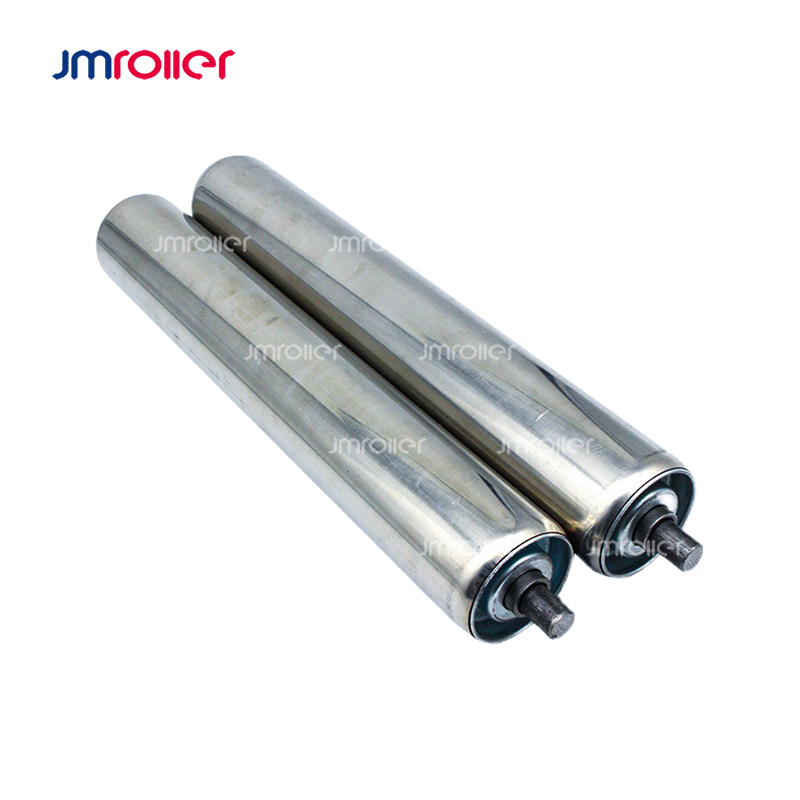
gravity roller conveyors are fitted with zinc plated, PVC, or stainless steel
conveyor rollers. These are mounted in a robust steel frame of either stainless
steel, or powder-coated paint.
Gravity conveyors are made to suit your needs, with lengths, widths, and
roller diameters to your requirements.
Application and selection guide
Gravity rollers support unit loads moving through an unpowered roller conveyor arrangement. Selection begins with the goods being handled and the conveyor layout, including package support, transfer points and the shaft mounting used by the existing frame.
Where this product fits
Use this product for a unit-handling discussion rather than a bulk belt-support specification. Describe cartons, crates or other loads and whether their bases are flat, rigid or irregular.
Information for a suitable proposal
Provide load dimensions and mass, roller spacing, shaft fixing and the proposed handling route. Include the smallest package, since it can determine the support needed between adjacent rollers.
Gravity roller selection starts with the goods being moved rather than belt loading data. Provide the smallest and largest package footprint, package mass, base rigidity and the proposed roller spacing. Show transitions, curves and stopping locations so that support remains suitable along the complete handling route.
Installation and maintenance considerations
Inspect the running surface and roller rotation. Keep transfer points clear and assess damaged package bases or seized rollers when movement becomes irregular.
An incline can change how quickly a load travels, so speed control and end stops should be assessed by the conveyor designer. For replacement rollers, confirm the shaft fixing and frame clearances. Keep the running surface clear and inspect for seized rollers; a single obstruction can affect movement of the whole package across the conveyor.
For related options, explore gravity roller information or discuss the application with JuMing.