
Product details
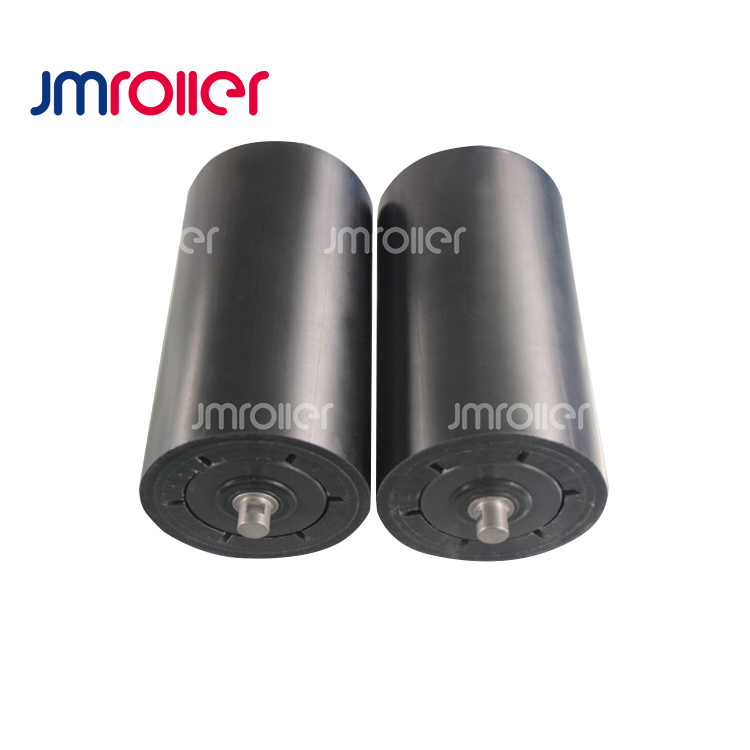
The full name of HDPE roller is high-density polyethylene roller, it has
better performance compared to traditional steel idler roller, having lager
market. It has better corrosion resistance and abrasion resistance.
HDPE Conveyor Rollers are designed to provide a longer operating life than
steel rollers, especially in dirty and wet conditions.
JM roller’s HDPE Roller have been used extensively on conveyors transporting
abrasive sand, iron ore, gold and platinum ore and coal.
We can also be supplied in many lengths and in a range of diameter and shaft
combinations.
Advantages:
* Lighter than steel roller, longer lifespan,
* Can be used in almost any application where steel rollers are used,
* Lower start-up costs on conveyor drives because of lighter weight,
* Recyclable, energy efficient, decreases vibration,
* Lower maintenance costs, reduce damage to conveyor belts,
* Quieter operation than traditional steel rollers,
* Water tight sealing arrangement,
* Performs well in harsh weather and extreme applications.
Application:
Mining
Steel mill
Cement plant
Power plant
Chemical Plant
Sea Port
Storage
etc.
Application and selection guide
HDPE rollers offer a polymer shell option for belt conveyors where handling weight, moisture and abrasive contamination deserve attention. Compare the complete roller construction with the carrying or return duty, rather than selecting a replacement from shell material alone.
Where this product fits
Consider where the roller operates: wet material, exposed transfer areas and washdown conditions can create different requirements. The suitability of the shaft, bearings and seals remains important even when the outer shell uses a polymer.
Information for a suitable proposal
Provide the existing roller drawing and describe any shell wear, corrosion or material build-up. Ask for the shell and internal assembly to be reviewed together for the actual operating environment.
The roller, its mounting frame and the belt form one working assembly. Confirm the shell length, shaft end form and installed clearances against the existing structure. Photographs help identify the arrangement, while an approved drawing is preferable when the replacement must fit an established conveyor.
Installation and maintenance considerations
Inspect the shell for uneven wear and confirm that the roller turns freely. Check surrounding frames for rubbing or trapped material during planned maintenance.
Include belt speed, conveyed material, expected contamination and the position on the conveyor in the inquiry. A carrying position, a loading point and a return strand expose a roller to different duties. Ask for the proposed bearing and sealing arrangement to be checked against those conditions rather than choosing by outside appearance alone.
For related options, explore roller sets and supporting arrangements or discuss the application with JuMing.