
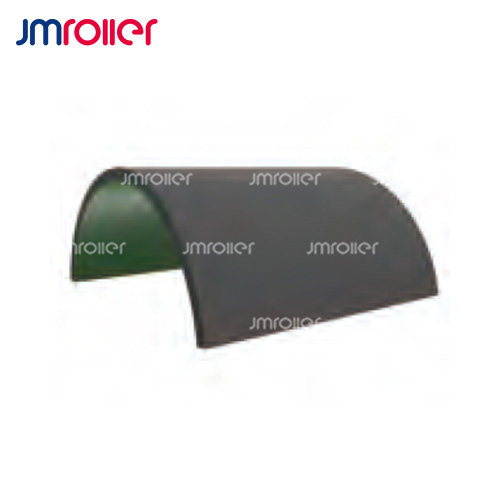
Product details
Product Features:
1、Combined with DCCDO cleaning agent, metal treatment agent and cement, it
can produce the maximum bonding strength and is safer to use;
2、Hardness Shore 65±5A, more friendly to conveyor belt;
3、Wear resistance ≤110mm³, provide >25000 hours service life under normal
working conditions;
4、40% lower friction than ordinary rubber lagging, lower resistance;
5、Suitable for non-driving pulleys;
6、No need to grind the CN layer.
Product Parameters:
| Polymer | NR/SBR |
| Density | 1.2 g/cm³ |
| Hardness | 60±5 Shore A |
| Tensile strength | 17 Mpa |
| Elongation at break | 420% |
| Abrasion | ≤110mm3 |
| Working temperature | -30~110℃ |
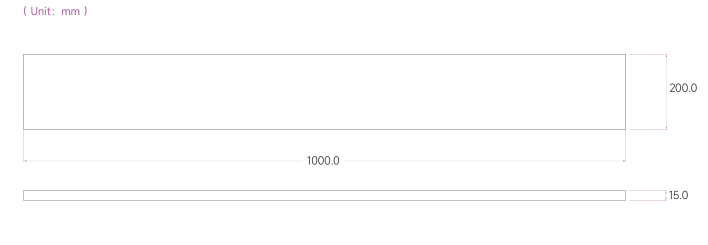
Product Size:
Application and selection guide
HPRL-1 is the plain cold bond rubber lagging option in the archived pulley covering range. A plain surface should be selected for the defined pulley role and environment, with the underlying shell and bonding preparation considered from the start.
Where this product fits
Identify whether the pulley is driven or serves another belt turning position. Explain why a plain surface is preferred and describe contamination or wear observed on the existing covering.
Information for a suitable proposal
Provide the pulley face dimensions, belt details and existing covering specification. Confirm the installation method and ask for the proposed plain surface to be reviewed against the operating duty.
Rubber lagging is selected around pulley duty, surface condition and the operating environment. Describe where the pulley sits in the conveyor and whether moisture, fines or material build-up are present. Pattern, installation method and the condition of the underlying shell should be considered together.
Installation and maintenance considerations
Inspect for uneven wear, lifting edges and trapped material. Check the shell condition and belt alignment when replacing the covering rather than renewing the surface in isolation.
For replacement work, provide pulley face dimensions, existing covering details and photographs of the wear pattern. Bonding surfaces and joint arrangements need to follow the selected installation procedure. Inspect the belt and adjacent cleaning equipment during the same shutdown, because uneven contact or trapped material can quickly damage a newly installed covering.
For related options, explore conveyor pulleys and their operating positions or discuss the application with JuMing.