
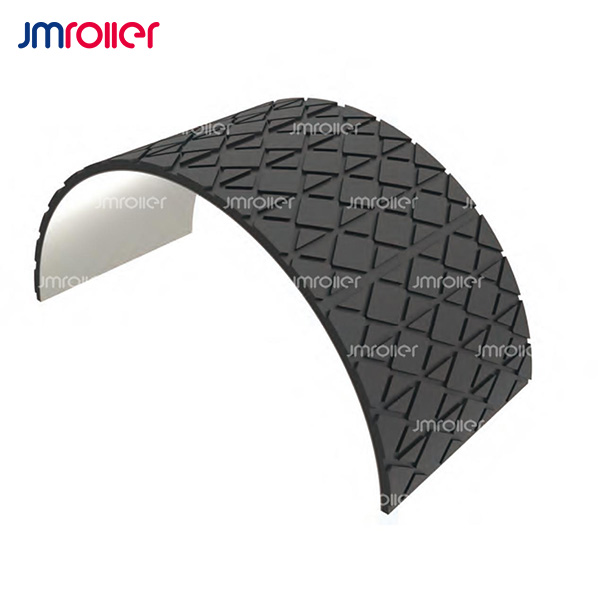
Product details
Suitable for cement, steel, coal conveying equipment with short downtime and
shortest replacement time.
Product Features:
1、Dedicated high temperature resistant bonding process, the bonding strength
is still maintained in high temperature environment, and the use is safer;
2、Installation is more convenient and faster, and the replacement saves 80%
of labor;
3、Implement T3/T4 high temperature quality standards;
4、Crown design to prevent the conveyor belt from deviating.
Product Parameters:
| Polymer | NR/SBR |
| Density | 1.2 g/cm³ |
| Hardness | 60±5 Shore A |
| Tensile strength | 17 Mpa |
| Elongation at break | 420% |
| Abrasion | ≤110mm3 |
| Working temperature | -30~110℃ |
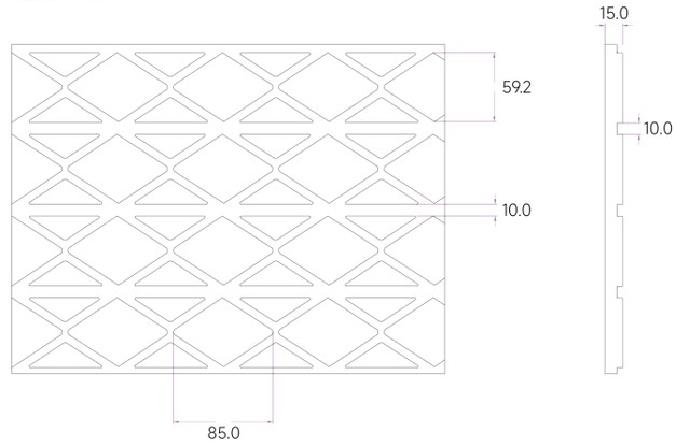
Product Size:
Application and selection guide
HSDRL-1 is identified as a segmented shell diamond rubber lag option in the archived range. The shell segment geometry and attachment method are central to fit, making the existing pulley construction important information for any replacement enquiry.
Where this product fits
Describe the segment layout and the diamond-pattern contact surface. Clarify whether the request covers only wearing segments or also the associated mounting and retention components.
Information for a suitable proposal
Provide pulley dimensions, segment curvature, fixing details and photographs of the shell arrangement. Include belt information and the observed wear pattern for review of the proposed replacement.
A slide-lag arrangement introduces a mechanical interface between the replaceable lagging and the pulley shell. Record the existing rail or retention details, segment layout and available access. A replacement strip must be compatible with the mounting system as well as suitable for the operating duty.
Installation and maintenance considerations
Inspect segment joints and attachment points together. Check that replacement sections seat correctly without creating raised edges or interference with surrounding equipment.
Provide photographs of the end retention and the areas showing wear. Discuss how worn components are removed and secured during replacement, and agree inspection access with the maintenance team. Damage to a rail or fixing should be assessed before new lagging is installed; a sound wearing surface cannot make up for an insecure attachment.
For related options, explore bonded and mechanically retained lagging or discuss the application with JuMing.