
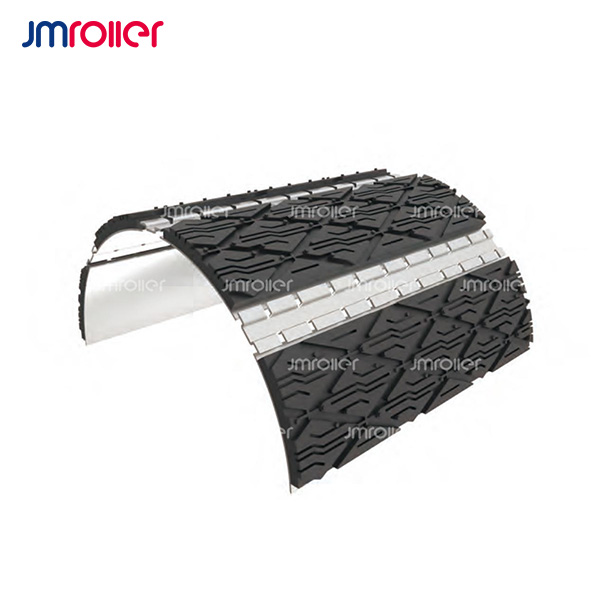
Product details
Suitable for conveying equipment with short downtime and short replacement
times.
Product Features:
1、Dedicated high temperature resistant bonding process, the bonding strength
is still maintained in high temperature environment, and the use is safer;
2、Installation is more convenient and faster, and the replacement saves 50%
of labor;
3、Implement T3/T4 high temperature resistance, C1 low temperature resistance,
LO/DO oil resistance quality standards;
4、Increase friction by 20%, better anti-slip effect;
5、It can correct the deviation of the conveyor belt of short-distance
conveyors and elevators;
6、Safer hot vulcanization bonding process.
Product Parameters:
| Polymer | NR/SBR |
| Density | 1.2 g/cm³ |
| Hardness | 60±5 Shore A |
| Tensile strength | 17 Mpa |
| Elongation at break | 420% |
| Abrasion | ≤110mm3 |
| Working temperature | -30~110℃ |
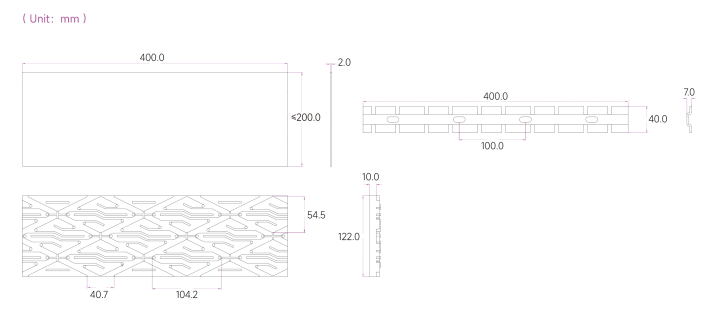
Product Size:
Application and selection guide
HSRL-1 slide-lag pulley lagging uses a replaceable section arrangement for a compatible pulley mounting system. The rail, retention and segment dimensions must be identified before a replacement is selected, in addition to reviewing the belt-contacting surface and operating duty.
Where this product fits
Explain the existing replacement method and whether work can be completed with the pulley in place. Access at the ends and around retainers affects the practical maintenance plan.
Information for a suitable proposal
Provide segment dimensions, rail or attachment drawings, pulley face width and photographs of the installed system. Confirm compatibility with the existing retention components before ordering sections.
A slide-lag arrangement introduces a mechanical interface between the replaceable lagging and the pulley shell. Record the existing rail or retention details, segment layout and available access. A replacement strip must be compatible with the mounting system as well as suitable for the operating duty.
Installation and maintenance considerations
Inspect the attachment system for wear or distortion. Secure replacements according to the selected system’s instructions and check each retained section before commissioning.
Provide photographs of the end retention and the areas showing wear. Discuss how worn components are removed and secured during replacement, and agree inspection access with the maintenance team. Damage to a rail or fixing should be assessed before new lagging is installed; a sound wearing surface cannot make up for an insecure attachment.
For related options, explore bonded and mechanically retained lagging or discuss the application with JuMing.