
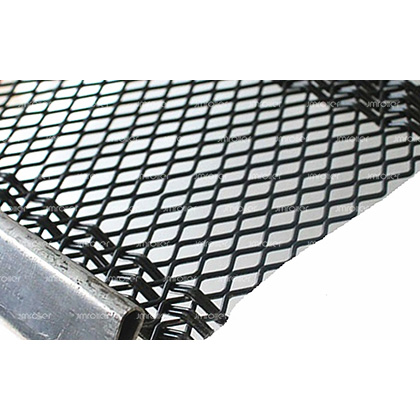
Product details
Stainless Steel Crimped Wire Mesh is a mesh structure formed by stainless
steel wires that are pre-bent and woven. This type of woven mesh uses stainless
steel wires and undergoes a special weaving process to create stable mesh
openings and a robust structure. The stainless steel material imparts it with
characteristics of corrosion resistance, high-temperature resistance, and wear
resistance.
Materials: Our Stainless Steel Wire Mesh products are generally made of
stainless steel of Type
304,Type 304LType 316 and Type 316LWeaving Patterns : Plain Weave: This type
is most commonly used. East warp wire passes alter-nately over and under weft
wires at right angles, and vice versa. Openings are square and wiresizes are the
same in warp and weft.
Twill Weave: This type is similar to plain, except that weft wire passes
alternatively over and undertwo warp wires (instead of one) in a staggered
fashion. Very tine meshes can be woven morereadily in twilled weave than in
plain.Dutch Weave : This type is a filter cloth construction made in the same
way as plain weave, exceptthat the weft wires are “driven up” to give a tighter
woven cloth with minute openings.Features : High temperature resisting, acid
resisting, alkali resisting,corrosion resistanting, etoGeneral Use : Stainless
steel cripmed wire mesh could be used in many fields, such as in minecoal
factory, construction and other industries. Some of the stainless steel crimped
wire mestcould also be used for roasting flour food and meat.
Stainless Steel Crimped Wire Mesh finds extensive applications in the
industrial field, serving the following purposes:
1. Screening and Filtering: Used on vibrating screens, flip screens, roller
screens, and other equipment to screen and filter various particles and
liquids.
2. Architectural Decoration: Used in interior and exterior architectural
decoration, railings, partitions, etc., providing both aesthetics and
ventilation.
3. Raw Material Handling: In the chemical, food, pharmaceutical, and other
fields, it is used to process and handle raw materials, powders, particles,
etc., for screening, filtering, and classification.
4. Safety and Protection: Used to create protective nets, window security
screens, etc., ensuring safety and preventing small animals from entering.
5. Mining Screening: Used in mining, quarrying, and other fields to screen
and classify various ores and mineral materials.
6. Stone Processing: Utilized in stone cutting, processing, and other
processes for screening and filtering.
Due to its corrosion resistance, high-temperature resistance, and durability,
Stainless Steel Crimped Wire Mesh plays a crucial role in various industrial
sectors, meeting the screening, filtering, and decorative needs of different
fields.
Application and selection guide
Stainless steel crimped wire mesh combines a woven screening arrangement with a specified stainless material. The grade, aperture and construction should be reviewed against the handled material and exposure conditions rather than assuming all stainless meshes perform alike.
Where this product fits
Describe the process medium and whether corrosion, cleaning or product contamination influenced the material choice. Screening performance still depends on the aperture and supporting machine arrangement.
Information for a suitable proposal
Provide the required material grade or project specification, aperture, wire dimensions and panel mounting details. Identify the cleaning environment and any process requirements for the supplier to review.
Screen selection depends on the feed and the screening machine together. Record the material, particle distribution, moisture, throughput objective and desired separation. A panel drawing should show the aperture, wire or element arrangement, overall dimensions, edge treatment and how tension or support is applied.
Installation and maintenance considerations
Inspect mesh surfaces, edges and supports for damage. Keep the panel attachment compatible with the selected material and follow the process equipment’s cleaning and maintenance requirements.
When replacing a screen, include photographs of the worn panel and its mounting area. Uneven wear, blocked apertures and damaged support bars offer useful clues about the operating problem. Inspect fixings and supporting surfaces during planned maintenance, because a correctly specified new screen can still wear unevenly if it is fitted onto a damaged or unsuitable support.
For related options, explore other screening media or discuss the application with JuMing.