
Product details
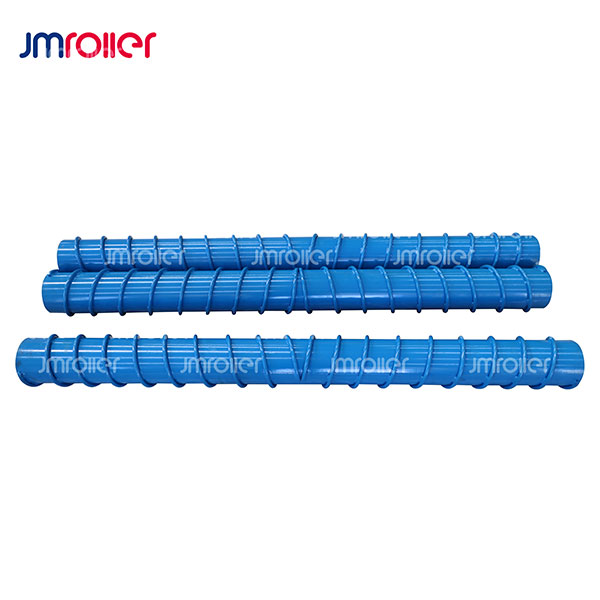
Spiral Roller include rubber sprial roller and steel spiral return roller,
they also were called self-cleaning roller, it can clean the sticky material on
the belt and protected build-up on the rollers. JM Roller maintenance-free
spiral return roller reduces downtime due to less carry back or less belt
mistracking.
The spiral roller has a strong ability to automatically correct the partial
belt conveyor belt, at the same time to maximize the protection and avoid the
rubber belt conveyor belt, the possibility of tearing apart; at the same time
maximize the conveyor belt life.
Specification:
1. For Belt Width: 400-2800mm
2. Surface Treatment: Electrostatic Powder Coating, Galvanization.
3. Standard: DIN, CEMA, JIS , GB etc.
Application:
Mining
Steel mill
Cement plant
Power plant
Chemical Plant
Sea Port
Storage
etc.
Application and selection guide
Spiral rollers use a helical surface arrangement on a conveyor roller, often considered for return-side material build-up. The spiral form, rotation and belt contact should be matched to the existing design rather than chosen as a purely visual substitute.
Where this product fits
Describe the returning material and whether the current roller suffers from deposits or uneven contact. Sticky carryback may also require attention at the discharge cleaner and transfer arrangement.
Information for a suitable proposal
Show the spiral configuration and the conveyor direction on the inquiry drawing. Confirm shell dimensions, shaft ends and the location of the roller in relation to neighbouring return supports.
The roller, its mounting frame and the belt form one working assembly. Confirm the shell length, shaft end form and installed clearances against the existing structure. Photographs help identify the arrangement, while an approved drawing is preferable when the replacement must fit an established conveyor.
Installation and maintenance considerations
Inspect the helical surface for local wear, loose elements or packed material. Confirm free rotation and adequate clearance before the conveyor is returned to operation.
Include belt speed, conveyed material, expected contamination and the position on the conveyor in the inquiry. A carrying position, a loading point and a return strand expose a roller to different duties. Ask for the proposed bearing and sealing arrangement to be checked against those conditions rather than choosing by outside appearance alone.
For related options, explore roller sets and supporting arrangements or discuss the application with JuMing.