
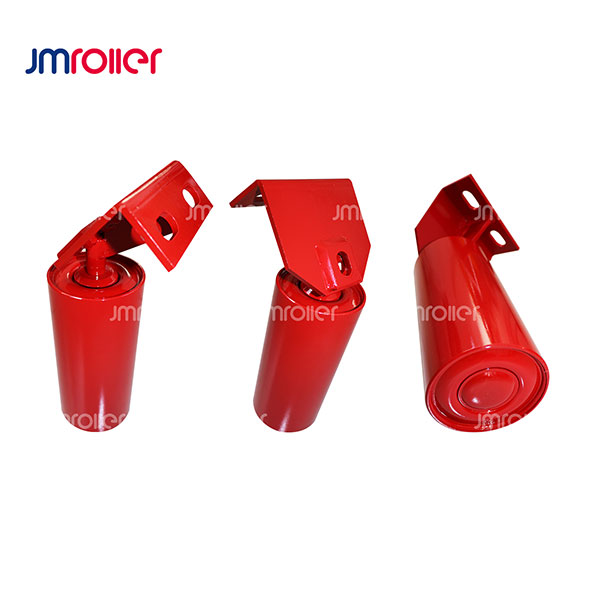
Product details
Wing roller is a side roller of Variable Angle Troughing Sets (Adjustable
Troughing Sets), the roller shaft end have centre hole, it is easy and quickly
to adjust the angle from 20 – 60°.
Wing roller is designed to seamlessly interchange with many mobile crusher
and screening equipment manufacturers original conveyor components.
Application:
Mining
Steel mill
Cement plant
Power plant
Chemical Plant
Sea Port
Storage
etc.
Application and selection guide
Wing rollers support the outer portions of a troughed conveyor belt within a carrying station. Their length, shaft ends and installed angle must work with the centre roller and frame to preserve the intended belt support profile.
Where this product fits
Identify the left or right station position where relevant and show the complete trough arrangement. A roller selected without the matching frame information may fit poorly or contact the belt incorrectly.
Information for a suitable proposal
Provide the station drawing and mark the wing position, mounting slots and nearby clearances. Explain whether the enquiry concerns one roller or a complete set refurbishment.
The roller, its mounting frame and the belt form one working assembly. Confirm the shell length, shaft end form and installed clearances against the existing structure. Photographs help identify the arrangement, while an approved drawing is preferable when the replacement must fit an established conveyor.
Installation and maintenance considerations
Check the adjoining centre roller and both wing brackets during replacement. Verify that the roller sits securely and turns freely before the conveyor is restarted.
Include belt speed, conveyed material, expected contamination and the position on the conveyor in the inquiry. A carrying position, a loading point and a return strand expose a roller to different duties. Ask for the proposed bearing and sealing arrangement to be checked against those conditions rather than choosing by outside appearance alone.
For related options, explore roller sets and supporting arrangements or discuss the application with JuMing.