
Product details
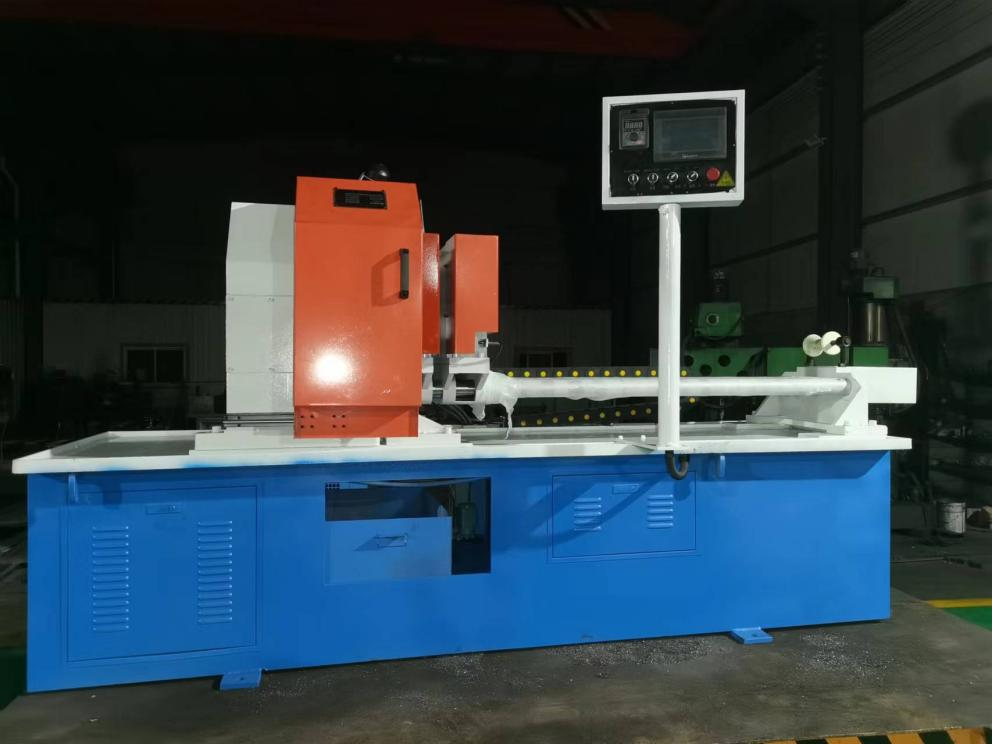
Conveyor Roller Making Machine
| Parameter |
Value |
| Model | QZ160 |
| Operation | Workpiece stationary,tool rotation |
| Cutting Range |
^89-159mm |
| Cutting Thickness |
3mm-8mm |
| Main Motor Power | 5.5KW |
| Spindle Speed | Variable frequency, stepless speed regulation |
| Clamping Method | Self-centering, hydraulic clamping |
| Feeding Length | One-time 20-1200mm |
| Tool Material | High-speed steel blade, hard alloy blade |
| Feed Rate | 0.09/r |
| Cutting Speed | Approximately 30 seconds for Ø89×2.5 |
| Weight | 2000Kg |
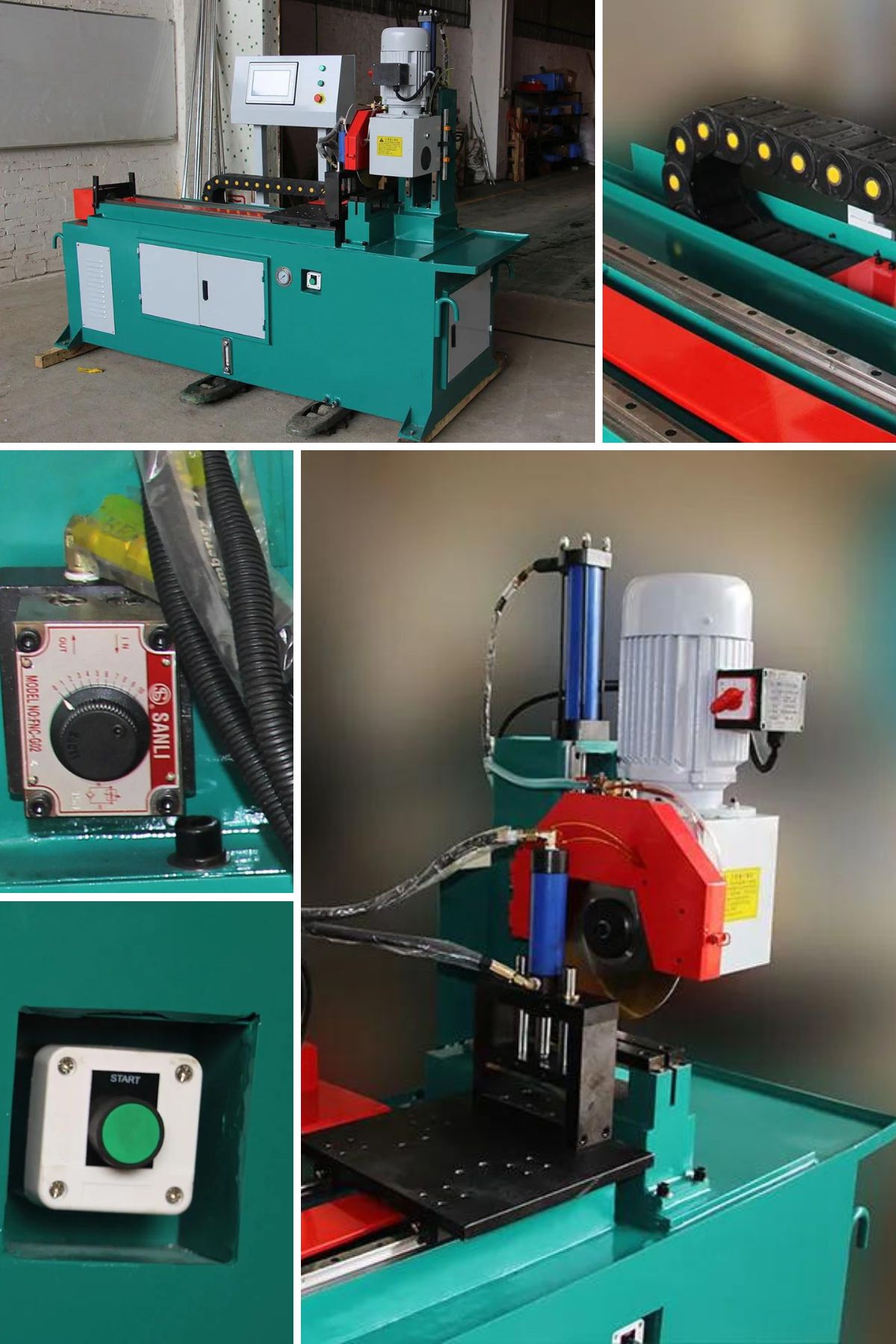
1. The equipment adopts a hydraulic clamping device and a CNC feeding mechanism controlled by PLC, with time circuit control, automatic cutting feed, and automatic fast tool withdrawal.
2. The processing method involves stationary workpieces and rotating blades to increase the speed of cutting operations.
3. The equipment employs a structure where the blade holder rotates, and the workpiece remains stationary (only linear feeding movement). The spindle has a hollow structure, allowing the workpiece to pass directly through it. The tool is secured to the blade holder with screws, and two blade holders are provided for different pipe diameters, ensuring stable accuracy. The cutting tools, either high-speed steel or hard alloy, can be selected according to specific requirements.
4. This equipment can automatically complete the processes of feeding, positioning, clamping, and cutting from the steel pipe blank. It is an indispensable specialized and ideal equipment for mass production of conveyor rollers.
Application and selection guide
Conveyor roller making equipment supports defined operations in the production of roller components and assemblies. An enquiry should begin with finished roller drawings and the intended process, allowing the proposed machine scope and tooling to be discussed accurately.
Where this product fits
Identify the operation to be added or improved within the production line. Explain the existing upstream component preparation and downstream assembly or inspection steps rather than requesting a machine from the finished roller name alone.
Information for a suitable proposal
Provide the roller product range, component drawings, changeover requirements and site layout. Specify the operations to be included and the acceptance checks that matter to the production process.
A roller manufacturing equipment inquiry should define the finished roller family and the intended production sequence. Provide component drawings, the current process and the expected changeover requirements. A machine specification should explain which operations are included and which preparation, inspection or handling steps remain outside its scope.
Installation and maintenance considerations
Plan tooling care, inspection access and operator training with the equipment supplier. Keep agreed process parameters and maintenance instructions available at the production station.
Review utilities, floor layout, operator access and integration with upstream and downstream equipment. Sample parts and acceptance criteria are useful when discussing a proposed process. Tooling, guarding and training should be agreed with the equipment supplier, and performance should be assessed against the agreed production task rather than an unsupported general capacity claim.
For related options, explore components used in roller manufacturing or discuss the application with JuMing.